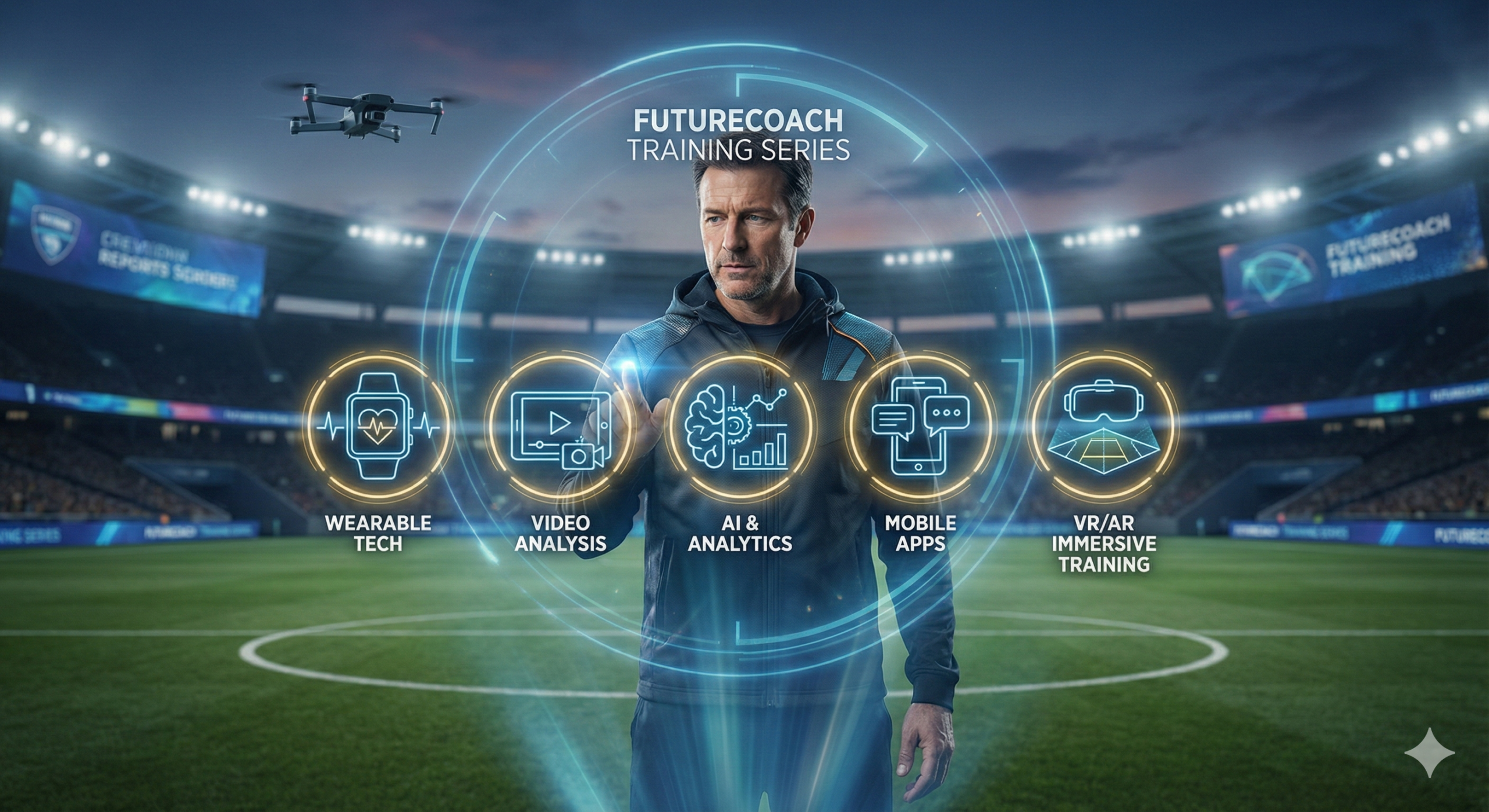
Module 1: Wearable Technology serves as the foundational pillar for the FUTURECOACH project’s modernization curriculum. In an era where data is as valuable as physical talent, this module addresses the most significant shift in modern sports coaching: the transition from subjective guesswork to objective analytics. Rather than overwhelming coaches with complex engineering manuals, the module adopts a narrative-driven learning approach. By immersing the learner in the realistic and relatable story of “Coach Elena,” the training demonstrates how simple tools can reveal invisible performance metrics that the naked eye often misses.
The module is structured to guide the learner through the lifecycle of data adoption, identifying specific opportunities at each stage:
1. The Scenario: The Guesswork and The Gap
The story begins with Coach Elena during a mid-season slump. She is managing a diverse group of athletes, and morale is low. She is under pressure to improve results before the upcoming qualifiers, relying heavily on her intuition and experience.
- The Trigger: During a high-intensity drill, her star athlete begins to lag behind. To Elena’s eyes, it looks like a lack of effort or motivation.
- The Conflict: She is tempted to push the athlete harder, assuming they are “slacking off.” However, she hesitates. Is it mental fatigue? Physical exhaustion? Or just a bad day?
- The Uncertainty: Without objective data, any decision she makes is a gamble. Pushing a fatigued athlete could lead to injury, while resting a lazy one could reward poor discipline. This reliance on “gut feeling” is the classic limitation of traditional coaching.
2. The Application: Unmasking Performance
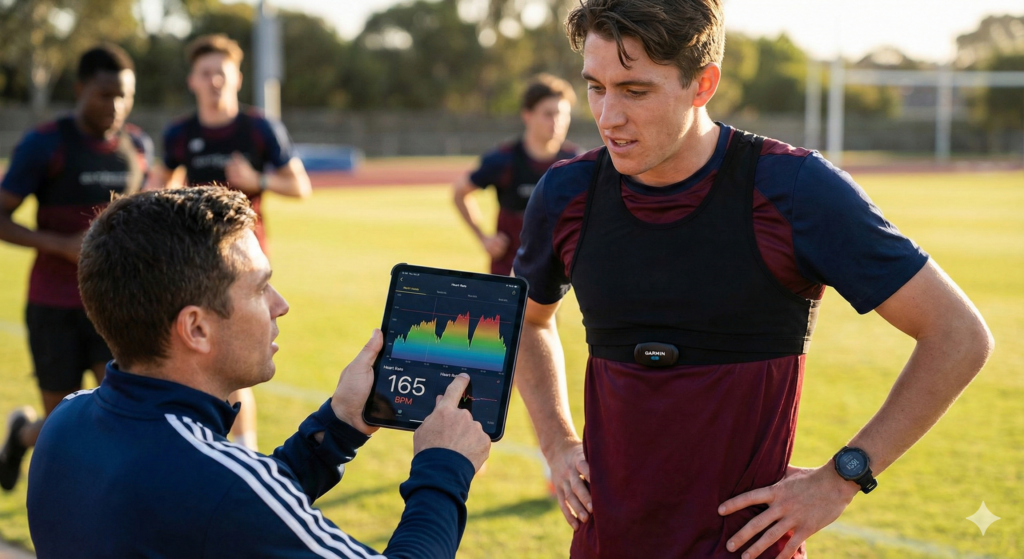
Elena decides to introduce a basic wearable device—a simple heart-rate monitor—to the session. The module highlights that this isn’t about replacing her expertise, but augmenting it.
- The Action: She equips the athlete with a fitness band to measure heart rate during the specific drill. She syncs it to a basic app on her tablet.
- The Reality: The numbers tell a different story than her eyes. The data shows the athlete’s heart rate is near maximum, even though their speed is low.
- The Insight: The “silent assistant” reveals that the athlete isn’t lazy; they are physically overloaded. The device has captured the invisible internal load that Elena could not see.
3. The Outcome: Measurable Gains
The consequences of this data integration are immediate and positive. Instead of shouting for more effort, Elena adjusts the training load based on the feedback.
- Immediate Feedback: Elena shows the athlete the numbers on the screen. The objective data validates the athlete’s feeling of exhaustion, building trust rather than resentment.
- Optimization: Over the next few weeks, Elena uses the wearables to track recovery. She spots trends—such as improved recovery times—that confirm her new training pace is working.
- Scalability: Moving from novice to intermediate application, she begins to use GPS sensors to monitor the whole team, transforming her “gut feeling” into an evidence-based strategy.
Why This Matters
This module goes beyond gadgetry to analyze why the technology creates a competitive edge. It emphasizes that FutureCoach is not just about having the newest gear; it is about “keeping your finger on the team’s pulse”—literally. The module teaches that a coach’s ability to interpret data is now as crucial as their tactical knowledge; ignoring these insights can lead to overtraining injuries (elite level risks) or stagnated development (novice level blindness). As the FUTURECOACH research highlights, wearables act as “high-powered microscopes,” allowing you to see patterns down to the finest detail.
Comprehensive Implementation Checklist
To prevent the common pitfall of “Data Overload,” participants are provided with an actionable checklist to effectively integrate wearables.
Step 1: Start Small (The Novice Approach)
- Focus on One Metric: Do not try to track everything at once. Start with a single data point, such as Heart Rate or Step Count.
- Use One Device: Begin by using a single heart-rate band for a group or rotating it among players. Get comfortable with the hardware before equipping the whole team.
Step 2: Validate the Setup
- Check the Fit: Ensure the device is placed correctly (e.g., strap tightness). Poor placement leads to inaccurate numbers.
- Trust the Connection: Verify the pairing with your phone or tablet before practice starts. Overcoming the initial “setup anxiety” is key to building confidence in the tools.
Step 3: Analyze the Feedback (The Intermediate Shift)
- Ask the Right Question: Look at the data and ask: “What story are the numbers telling me?” (e.g., Is the heart rate too high for this intensity?).
- Spot the Trend: Don’t just look at one day. Use the app dashboard to see if numbers are improving over weeks (e.g., “Did our endurance improve?”).
Step 4: Action and Communication
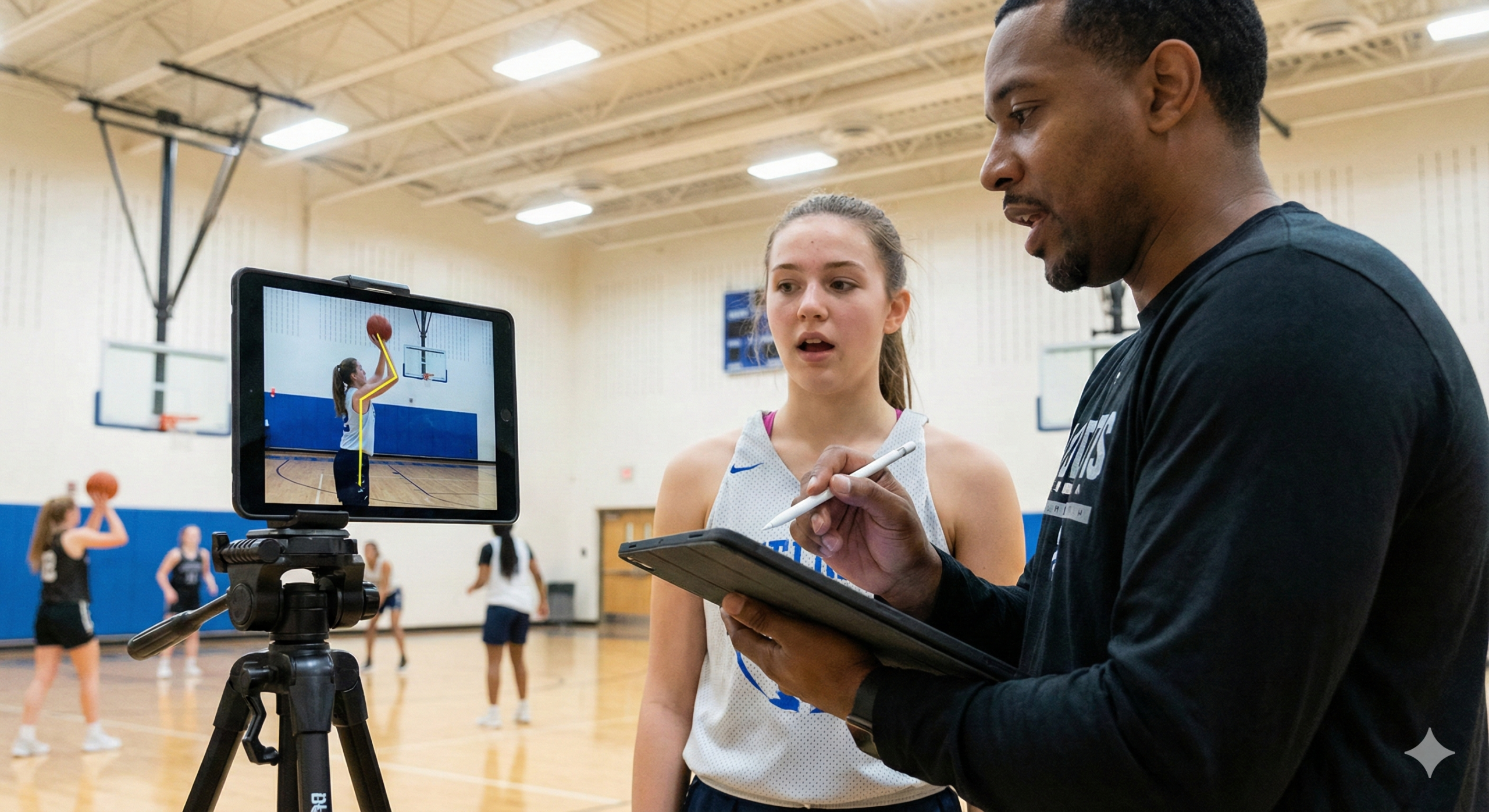
- Share the Data: Use the numbers to motivate. Show the athlete their lap times or heart rate recovery. Visual proof is a powerful motivator.
- Adjust Based on Evidence: If the data shows fatigue, reduce the load. Make decisions backed by solid evidence, not just guesses.
By mastering these steps, coaches transform from passive observers into proactive, data-driven performance managers.